Quick answer
Choose no-code (Webflow, WordPress and similar) when you need a website, funnel or simple tool built fast and affordably using functionality that already exists. Choose custom development when your product needs unique logic, serious scale, or deep integrations no platform offers off the shelf, or when the software itself is the business. Many projects are best as a hybrid of both. The real decision isn't the tool, it's picking one connected team that can build both, so you're never limited to whatever a single-skill vendor happens to sell.
No-code versus custom development gets argued like a religion, and that is the first mistake. They are not two rival teams competing for the same job. One is a fast way to assemble proven, pre-built tools into something that works. The other is writing software from scratch so it does exactly what you want, no more and no less. Framed that way, the question stops being “which is better” (no real answer) and becomes “which one does my project actually need” (a question you can settle in about five minutes). This guide covers what each approach really is, where each shines, where each hits a wall, what they tend to cost, and the honest hybrid most growing businesses land on.
Key takeaways
- No-code (Webflow, WordPress, Wix, Framer and similar) is fastest and cheapest when the functionality you need already exists: marketing sites, landing pages, funnels, and simple internal tools.
- Custom development earns its higher cost and longer timeline when you need unique logic, deep integrations, serious scale, or when the software itself is the product.
- The cost gap is real but often misread: a typical no-code build runs from a few thousand to the low tens of thousands, while custom apps commonly start in the tens of thousands and climb (illustrative, not a quote).
- Hybrid (a no-code front paired with custom where it counts, and low-code glue in between) is what most growing businesses actually need, not one purist camp or the other.
- The “you’ll outgrow no-code” warning is real but overstated: most businesses never hit the ceiling, and when they do, a team that codes can extend or migrate in stages instead of rebuilding from zero.
- The decision that matters most is not the tool. It is hiring one connected team that can build both, so your options never quietly shrink to whatever a single-skill vendor happens to sell.
What no-code and custom actually mean
Half the arguments about this topic come from people using the same words to mean different things. So let us define them plainly before comparing them.
No-code (and its low-code cousin)
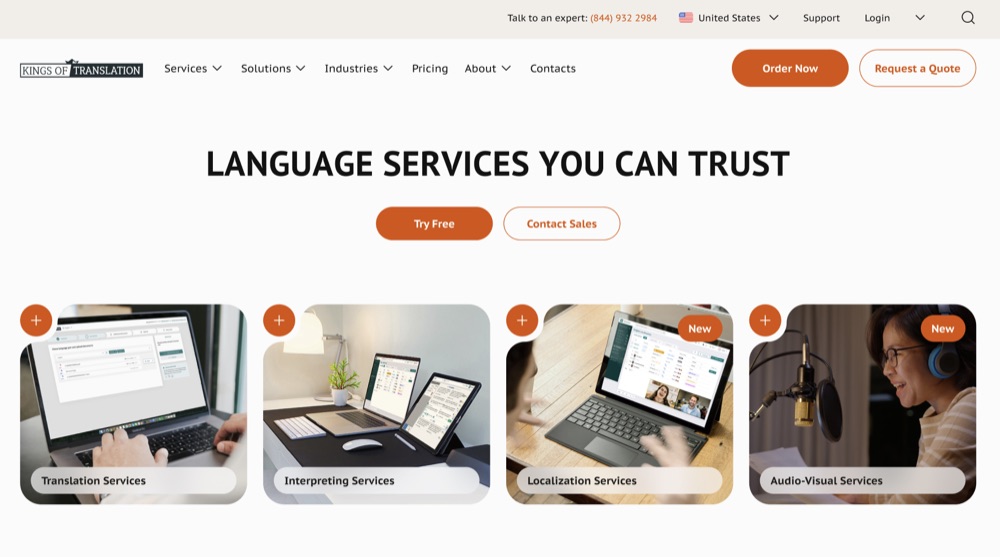
No-code means building with visual platforms where the underlying code is handled for you. Think Webflow, WordPress, Wix, Framer, ClickFunnels, HighLevel, Kajabi, Shopify. You drag, configure, connect and publish. You are assembling and arranging proven components, not writing programs. Done well, nobody visiting the finished site or funnel can tell it was built without code, and that is the whole point.
Low-code is the same idea with an escape hatch. You still work mostly in a visual builder, but you can drop in small pieces of real code, custom scripts, embedded components, API calls, when the platform alone cannot do what you need. It is the natural bridge between pure no-code and full custom, and it is where a lot of practical builds actually live.
The strength of no-code is speed and cost. The trade-off is that you operate inside the boundaries the platform gives you. For a huge share of real business needs, those boundaries are nowhere close to being a problem.
Custom development
Custom development means writing the software yourself in real code: React, Next.js, Node, a proper database, purpose-built infrastructure. Nothing is assumed and nothing is off-limits. If you can describe it clearly, it can be built. This is how you get custom software that fits your process exactly, instead of bending your process to fit whatever a tool decided you should do.
The strength of custom is that it has no ceiling on logic, scale or integration. The trade-off is that it costs more, takes longer, and you own it: the codebase, hosting, security and maintenance, all of it. That ownership is a genuine asset when the software is central to your business, and an unnecessary burden when it is not.
The hybrid in the middle
Here is the part the purists on both sides tend to skip. Most real projects are not cleanly one or the other. A very common and very sensible setup is a no-code marketing site and funnel bolted onto a custom-built app that handles the one thing that makes the business different. The no-code part gives you speed where speed is all you need. The custom part gives you power exactly where a platform would hold you back. Low-code sits in between and quietly stitches the two together. We will come back to this, because it is the answer for more businesses than either extreme.
No-code vs custom at a glance
| No-code | Custom | |
|---|---|---|
| Speed to launch | Days to weeks | Weeks to months |
| Upfront cost | Low | Higher |
| Flexibility | Bounded by the platform | Effectively unlimited |
| Who handles hosting and security | The platform, mostly | You (and your team) |
| Maintenance | Mostly handled for you | You own it |
| Best for | Sites, funnels, simple tools | Apps, complex logic, scale |
| Main risk | Hitting a functional ceiling | Higher cost, longer timeline |
| Ownership | Your accounts, platform-hosted | You own the full codebase |
No-code vs custom vs hybrid: the deeper comparison
The two-column view hides the middle option most businesses land on. Here is the same decision across the five factors that actually drive it.
| Factor | No-code | Custom | Hybrid (low-code) |
|---|---|---|---|
| Cost | Lowest upfront and ongoing | Highest to build and maintain | Moderate: pay for custom only where it earns its keep |
| Speed | Fastest to launch | Slowest to first version | Fast where standard, slower only on the custom piece |
| Ownership | You own the accounts and content, the platform owns the engine | You own everything, code included | Split: platform owns the standard parts, you own the custom code |
| Scalability | Great to a point, then bounded by the platform | Scales as far as you invest | Scales the custom core independently of the no-code shell |
| Maintenance | Platform handles most of it | Entirely your responsibility | Lighter: only the custom part needs hands-on upkeep |
The pattern is hard to miss. No-code wins on cost, speed and low maintenance. Custom wins on ownership and unlimited scale. Hybrid is not a compromise so much as a way to buy each strength only where you actually need it.
When no-code is the right call
No-code is the right call more often than engineers like to admit. Reach for it when:
- You need a marketing site, landing page, or sales funnel. These are exactly what no-code was built for, and building them custom is usually paying more for the same result.
- Speed and budget matter more than bespoke functionality. If getting live this month beats getting a perfect edge case next quarter, no-code wins.
- The features you need already exist somewhere. Booking, payments, forms, memberships, email capture: if it is a solved problem, you want it configured well, not reinvented.
- You want the platform to handle hosting, security and updates so you do not have to think about them.
Who is this for? Founders validating an idea, service businesses that need a site that converts, marketers running campaigns, and any team whose product lives offline while the website simply needs to sell it. If that is you, no-code is not a “cheap starter option” you graduate from. It may genuinely be the correct long-term choice.
For the classic version of this decision, our Webflow vs WordPress breakdown covers the two platforms most businesses end up choosing between. And if you have already outgrown a basic builder, when to leave Wix or Squarespace covers the signals that it is time to move up.
When custom is the right call
Custom earns its cost when the software is doing real work, not just presenting information. Reach for it when:
- Your product has genuine logic: pricing engines, multi-step workflows, user roles and permissions, calculations, matching, scheduling.
- You need to integrate deeply with other systems in ways no plugin or connector covers.
- You are building something meant to scale to serious volume, where platform limits and per-record pricing would eventually bite.
- The software is your competitive edge, so “good enough, like everyone else’s” is not good enough.
Who is this for? SaaS founders, marketplaces, operations-heavy businesses drowning in spreadsheets, and any team where the app itself is the product or the profit engine. If one of the points above describes you, a website builder will feel like wearing shoes a size too small: fine at first, painful by month three. For a realistic sense of what that investment looks like, our guide to custom web app cost breaks down what actually drives the number.
The hybrid most businesses actually need
Most growing businesses do not sit cleanly in either camp, and forcing the choice usually leads to regret. Build everything custom and you burn budget rebuilding things Webflow could have shipped in a week. Force everything into no-code and you eventually contort the platform into doing something it was never meant to do, which is slow, fragile and expensive in its own quiet way.
The hybrid sidesteps both traps. A typical shape: a fast, polished no-code marketing site and funnel out front, a custom-built application behind it for the part that makes you money and makes you different, and low-code connective tissue (automations, embedded components, API calls) linking them so the whole thing feels like one product to the customer. You pay for custom engineering only on the slice that truly needs it, and let proven platforms handle everything that is already a solved problem.
The catch is that a hybrid only works cleanly when one team owns both halves. When the no-code shop and the custom developers are different vendors who have never spoken, the seams show, the integrations break, and every problem becomes a game of “not our part.” One connected team on a flat monthly retainer removes that friction entirely: the people building the funnel and the people building the app are the same crew, working from the same brief. This is exactly why we build across no-code platforms and custom software under one roof, so the boundary between them stops being your problem to manage.
The ceiling: when you outgrow no-code (and how migration works)
The loudest argument against no-code is “you will outgrow it.” It is sometimes true and usually overstated. Most businesses never come close to the ceiling. But it is worth knowing what hitting it actually looks like, because the fear is scarier than the reality.
Signs you are approaching the ceiling
- You are paying for workarounds, third-party add-ons and duct-tape integrations just to make the platform do one thing it resists.
- Per-record or per-seat pricing is climbing faster than your usage, and the platform is now a growing line item rather than a fixed one.
- A feature your customers keep asking for is simply not possible inside the platform, at any price.
- Performance or control has become a real constraint, not a minor annoyance.
How migration actually works
Here is the part that calms most of the panic: outgrowing no-code is almost never a from-scratch rebuild. Handled properly, migration happens in stages. You keep the parts that still work, rebuild the one or two features that hit the wall in real code, run old and new side by side while you move data across, then retire the platform pieces you no longer need.
The single biggest factor in how painful this is: whether the team that built your no-code version can also write real code. A no-code-only shop hits the wall right alongside you and shrugs, and now you are hiring a second, unfamiliar team to untangle work they did not do. A team that does both can extend the platform when it stalls, or migrate you off it cleanly, because they already know your data, your logic and where the pressure is. That is the real decision hiding under “no-code vs custom”: not which tool, but whether whoever builds it can do both.
Common myths, cleared up
”No-code is not ‘real’ development”
It is real building, just at a different layer of abstraction. The person configuring a Webflow site or a HighLevel funnel makes the same decisions about structure, logic, data and user experience as a developer, minus the boilerplate. The customer cannot tell, and the customer is the only one whose opinion pays you.
”Custom is always better because you control everything”
Control is a benefit and a bill. Custom gives you total control, but that also means you own every security patch, hosting decision, bug and hour of maintenance. For a marketing site, that is like buying a delivery truck to carry your groceries home: more capability than you need, and you pay for all of it, forever.
”No-code cannot scale”
No-code scales fine for the vast majority of what businesses put on it, and modern platforms happily serve large traffic and real transaction volume. What no-code cannot always do is scale into unlimited custom logic. “Can it handle my visitors” is usually yes. “Can it become a bespoke SaaS product” is where the honest answer becomes “not without custom.” Confusing those two questions is what fuels the myth.
”You have to pick one and commit forever”
You do not. The hybrid exists precisely because the smart move is often to use both, and the line between them can shift as your needs change. Committing to a team that only does one is the actual trap, not committing to a tool.
Two real scenarios
Numbers below are illustrative to show the shape of the decision, not a quote.
Scenario one: the service business site
A consultancy needs a professional site that ranks, captures leads and books calls. Everything it needs (pages, blog, forms, scheduling, payments) already exists as proven functionality. A no-code build gets them live in two to three weeks for roughly $4,000 to $9,000, with low monthly platform costs and almost no maintenance burden. Going custom here might run several times that and take two or three months to arrive at the same result. No-code is not the budget option in this case. It is simply the correct one.
Scenario two: the operations app
A logistics company is running its dispatch on a tangle of spreadsheets and manual messages. It needs custom scheduling logic, role-based access for drivers and managers, and live integration with a mapping and tracking provider. No platform does this off the shelf. A custom build might start around $30,000 to $60,000 and take a few months, and it pays for itself by removing hours of manual coordination every day. Here, the cheaper-looking no-code route would mean bending the platform until it breaks. Custom is the honest answer. In both cases the right tool was obvious once we described the work plainly.
How to decide in five minutes
Answer these:
- Is it a website or funnel, or is it an app? Website means lean no-code. App means lean custom.
- Does the core feature already exist on a platform? Yes means no-code. No means custom.
- How unusual is your logic? Standard means no-code. Genuinely bespoke means custom.
- Speed or flexibility, which hurts more to lose? Speed means no-code. Flexibility means custom.
- Will part of it be standard and part unique? Then stop choosing, because you want a hybrid.
If your answers point cleanly one way, you have your answer. If they are split, that is not indecision. That is a hybrid project telling you exactly what it is. Timeline is often the deciding pressure too, so if launch dates matter, our guide to how long it takes to build a website is a useful reality check.
The bottom line
No-code and custom are not rivals. They are different tools for different jobs. No-code for speed and standard needs. Custom for logic, scale and the parts that make you you. Hybrid when it is honestly some of each, which is more often than either purist camp admits.
The real mistake is not picking the “wrong” tool. It is picking a team that can only do one, so your options quietly shrink to whatever they happen to sell. One connected team that builds, grows and automates on a flat monthly retainer can recommend honestly, build both, and keep going when the requirements change, instead of leaving you to juggle a no-code shop, a dev studio and whoever glues them together.
Not sure which side of the line you land on? Book a call and we will tell you straight, including “you do not need custom for this,” if that is the truth. Want the numbers first? See pricing to understand exactly what a flat monthly retainer covers.